


Great work from Daria Kalinska-Lysiak and Hannah Nyarkoah Nyarko which was published recently in Nature Communications!

 Daria is a CRT cohort 2 graduate and Hannah is a cohort 4 student – both are based at RCSI and supervised by Darran O’Connor and their work ” Spatial analyses implicate high stromal tumour-infiltrating CD8+ lymphocytes as a negative predictive marker for chemotherapy in estrogen receptor-positive breast cancer “, which has been published in Nature Communications, provides insights into the immune states in ER+HER2- breast cancer, and proposes sTIL CD8+ density as candidate biomarker for treatment decisions.
Study Overview
For women with a common type of breast cancer (called hormone-positive, HER2-negative), the outlook is generally good for the first 5–10 years after diagnosis. However, some cancers can come back later, and it is currently difficult to predict who is at risk—especially for patients whose test results (Oncotype DX score 16–25) fall in a middle “uncertain” range.
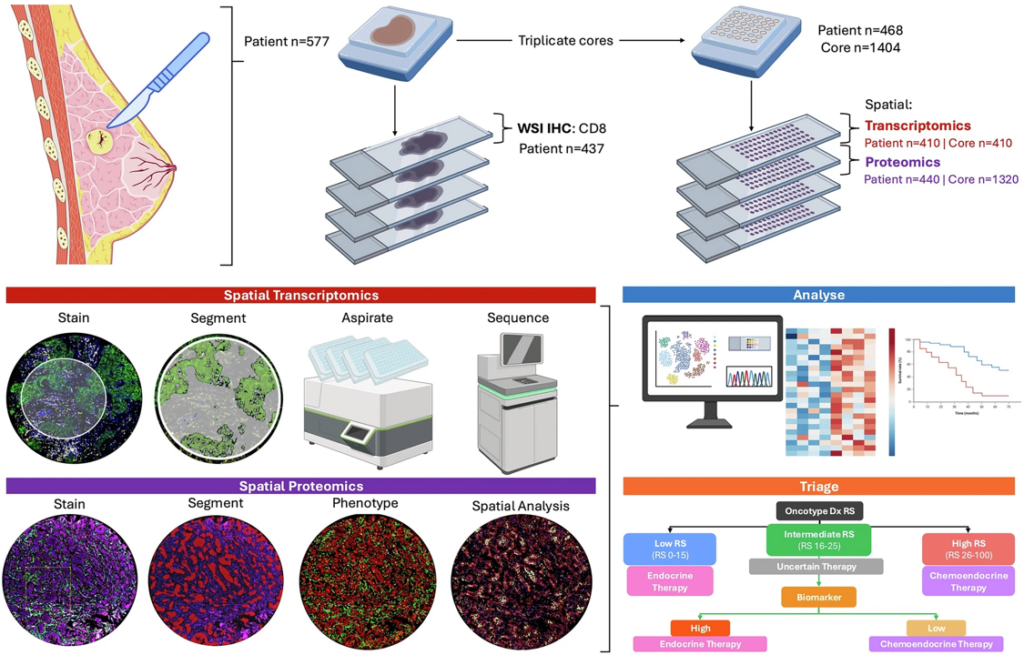
In this study, researchers closely examined tumour samples using advanced digital and multiomics techniques that show where different proteins and genes are active within the tumour. They looked at both the cancer cells themselves and the surrounding tissue (called the stroma).
They found that the immune environment in these two areas can behave differently. In some cases, both the tumour and surrounding tissue showed signs of immune activity, but this activity also included signals suggesting the immune system may be “tired” or suppressed, which could limit its ability to fight cancer.
Importantly, the researchers discovered that patients who had higher numbers of a type of immune cell (CD8+ T cells) in the surrounding tissue actually had worse outcomes when given chemotherapy. This was unexpected, since these immune cells are often thought to help fight cancer. While these results require further external validation, they may help define patients who would not benefit from more aggressive treatment with adjuvant chemotherapy.
What this means
- Measuring certain immune cells in tumour tissue—specifically CD8+ cells in the surrounding stroma—could help doctors better predict which patients are at higher risk of cancer returning.
- This could improve decision‑making about treatments, especially for patients in the “intermediate risk” group where current tools are less precise.”
Well done to Hannah and Daria on this significant research paper!